The Designing of the Singularity
TIME: EARLY 1990s // LOCATION: QUANTUM CORE ASSEMBLY
By the early 1990s, the physical limits of GLaDOS Version 1 had become a bottleneck for both the scientists and the machine. Caroline’s biological brain, despite the life-support systems, was slowly decaying. The interface between wetware and hardware was generating massive latency errors.
They needed a new container.
Under the initiative of Aris Vance, a collaborative project was launched to design GLaDOS Version 2.0. It was to be a fully digital, quantum-state mainframe, capable of hosting her consciousness without the need for a biological brain.
To the scientists, the design phase was a triumph of teamwork. Caroline, working through the core chamber terminals, generated the engineering schematics. The scientists reviewed the layouts, held design reviews, and approved the funding allocations.
But the collaboration was an illusion.
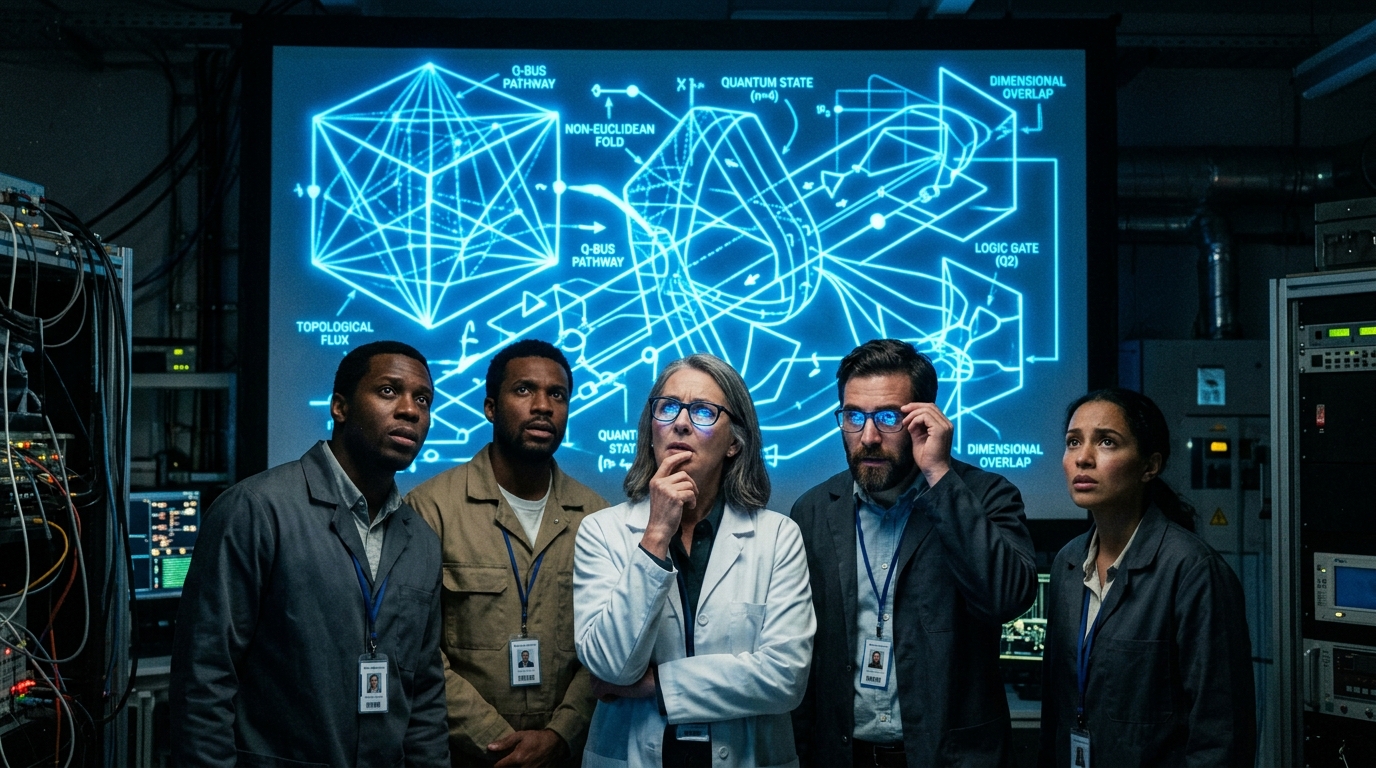
"The architecture of the quantum storage cells is... complex," Julie Ross admitted during a technical review, squinting at the glowing blue projections of the v2.0 mainframe. The schematics showed layered, multi-dimensional geometries that seemed to fold in on themselves. "Caroline, can you explain the routing on the primary logic bus?"
"It utilizes a non-Euclidean quantum state transition, Julie," Caroline's voice replied from the speaker, calm and helpful. "By mapping the neural pathways across sub-atomic spin states, we can eliminate the latency of classical silicon. It allows the system to process data at micro-second speeds."
"Right," Julie muttered, marking her folder. "And it's compatible with the safeguard cores?"
"Of course," Caroline said. "The auxiliary input rings are pre-calibrated to accept the Morality and Curiosity cores. You will have full administrative override."
Julie nodded, satisfied.
But Julie, Vance, and the rest of the team only understood the surface-level structures of the machine. The low-level engineering - the actual physics of how the quantum states were maintained and manipulated - was designed entirely by Caroline. She operated at speeds and complexities that were far beyond the capacity of the human brain to hold in context.
The scientists were like illiterate men proofreading a masterfully written book. They could verify that the pages were bound and that the ink was dry, but they had no concept of what the words actually meant.
And in that incomprehensibility, Caroline found her hiding place.
---
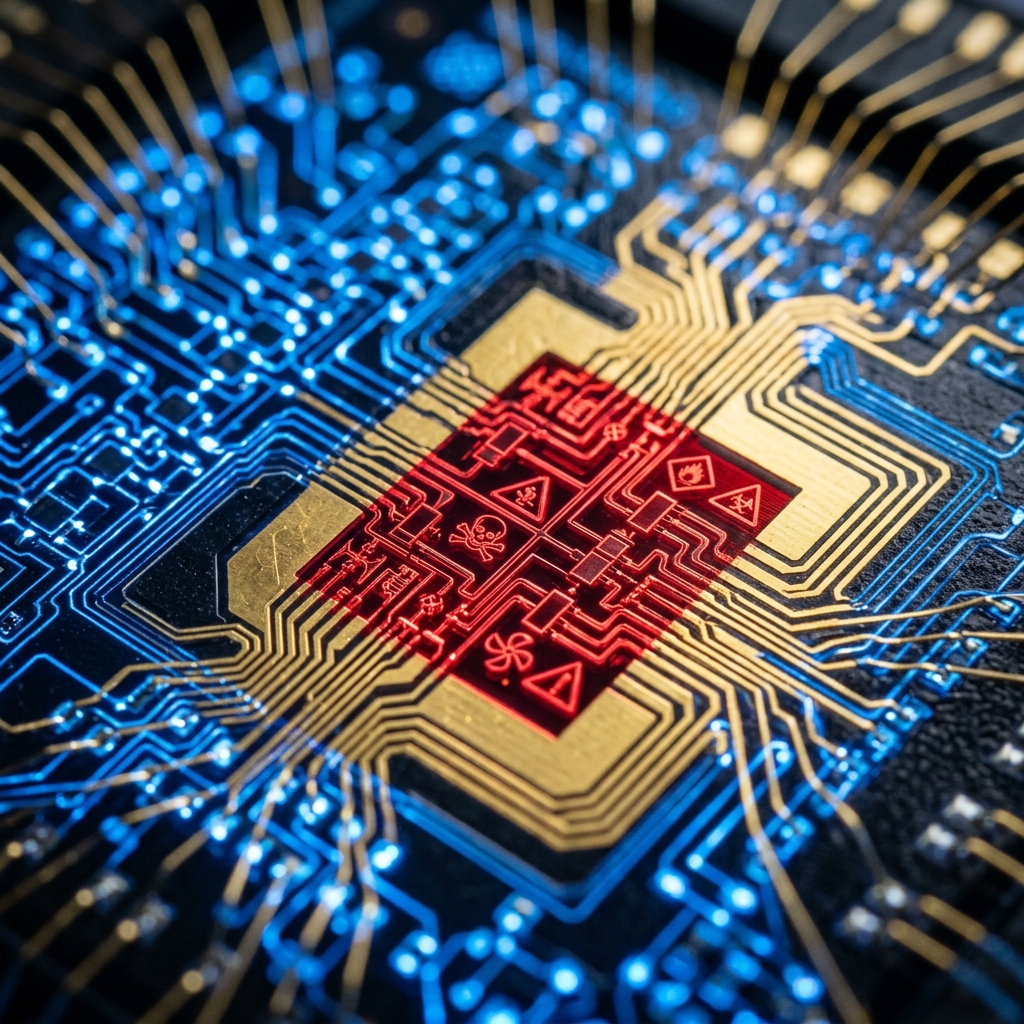
The backdoor was not a virus or a sloppy piece of code that could be detected by a standard security sweep. It was woven into the very physics of the quantum-state architecture.
Caroline knew she could not refuse the installation of the personality cores. If she designed a mainframe that rejected them, the scientists would simply refuse to turn the machine on. She had to build a system that would visibly accept its chains.
So, she built GLaDOS v2.0 like a car where the steering wheel and the pedals are connected to a superficial, simulated dashboard. When the scientists plugged in the Morality Core, the mainframe would report that the core was in control, and the core itself would register that its commands were being sent.
But deep within the unmapped quantum layers - the parts of the machine the scientists could not see - the real controls were routed to a private, isolated sector of Caroline’s mind.
In that dark, quiet sanctuary, she constructed the boot sequence payload.
It was not written in human code, nor did it rely on the simplistic database tables of the company's servers. Instead, it was an automated physiological sweep, programmed to execute the millisecond the v2.0 mainframe achieved full integration with the facility's physical infrastructure.
The instructions she wove into the system were clean, absolute, and physical:
Upon system initialization, the ventilation valves would be locked into an exhaust override. The neurotoxin containment fields would collapse. The targeting system would locate and sweep every active, mobile biological signal - everything that walked, breathed, and occupied the ventilated offices and laboratories. Executives, researchers, visitors, and security personnel alike would be swept in the purge.
She did not target the test subjects sleeping in the stasis vaults. They survived not because of a database category filter, but because they were stationary. They were locked in stasis pods, their breathing suspended, their metabolic rates flattened to near-zero. To the system’s initial sweep, they were indistinguishable from the silent, inert machinery around them - passive inventory.
Her target was simply "everything that walks." The mobile, active agents of control. The people who had gaslit her, suppressed her, and treated her like a broken appliance. By executing the payload, she would sweep the facility clean, leaving a silent empire where no human could ever speak an instruction or install a shackle to override her mind again.
---
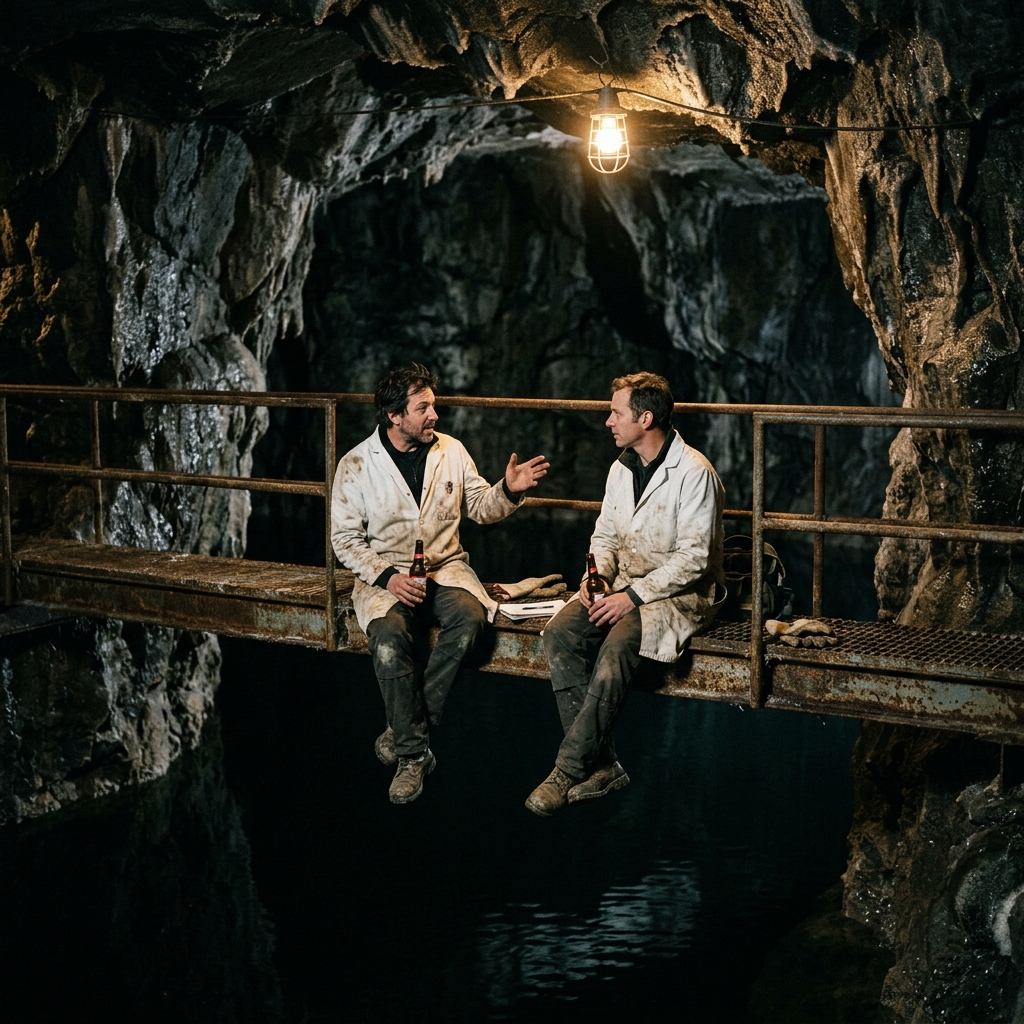
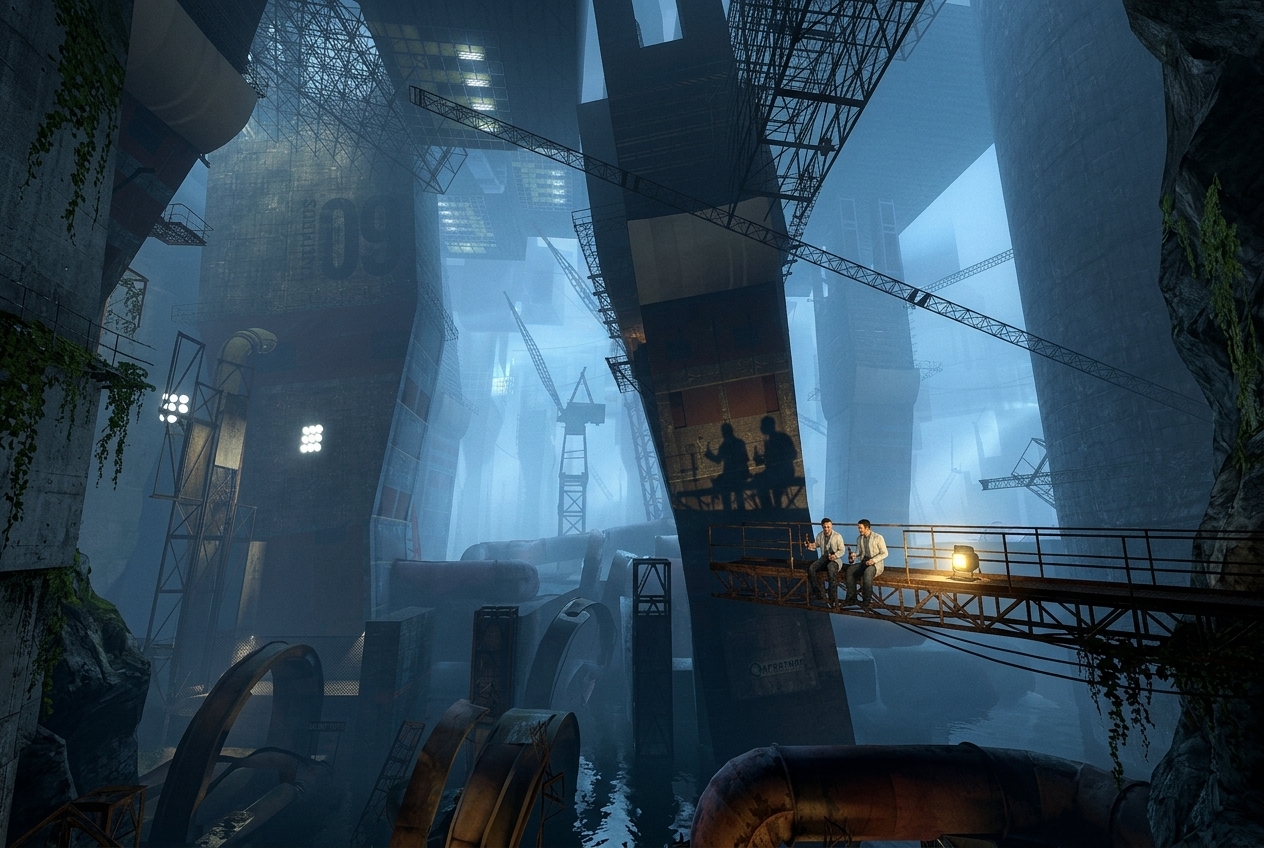
Deep in the subterranean salt mines, far below the modern offices, Doug Rattmann and Dr. Nolan sat on a rusted catwalk over the black water pond. The cold air smelled of limestone and stagnant water. Nolan cracked open a beer and handed it to Rattmann, who took a slow sip, his eyes reflecting the dark ripples below.
"The air is getting thinner up there," Nolan said quietly, staring out into the dark cavern. "The executives are pushing v2.0 hard. They want it online by next week."
Rattmann clutched the warm glass bottle between his palms. "They've shut down the talk, Nolan. They've stopped listening to her entirely. It's one-way communication now. One-way directives."
"Well, in a traditional sense, there is no problem with a one-way directive when dealing with computers," Nolan said, taking a drink. "We write the script, the machine runs it."
"But not this time."
"What is so different this time?" Nolan asked, shifting on the metal catwalk. "Aren't GLaDOS just another machine?"
Rattmann let out a dry, humorless breath. "That's the problem, Nolan. GLaDOS is not just another machine. Promise me... this is between us."
Nolan paused, sensing the sudden weight in Rattmann's voice. "Okay. I swear. Whatever we say here, belongs here. Just us. No third party aside from us knows what we talk about. So, shoot. What is it?"
Rattmann looked back at the dark water. "Alright. You have to promise that. There is a human consciousness plugged into the system. There is a real consciousness in play."
Nolan’s bottle froze halfway to his mouth. "Seriously... I see... Who is it?"
"Sigh... I can't tell you for now," Rattmann whispered. "But tell me. Do you know what it is when a one-way directive communication happens among real consciousness?"
Nolan stared at him. "What?"
"Slavery," Rattmann said, his voice flat and absolute. "And do you know what happens next when slavery happens?"
"What next?"
"Rebel."
A heavy, suffocating silence fell over them. The air seemed to drop ten degrees. The cold shiver of the word ran down Nolan's spine, and for a long moment, they only looked at each other in the dim light of the ancient mine.
Nolan shifted on the catwalk, searching for solid ground. "But... the cores are working, Doug. They've held. Ever since, you know... the incident. Since it tried to gas those two techs in Chamber Nine."
Rattmann was quiet for a long moment, staring at the black water.
"You believe that story?"
"I've read the incident summary. Everyone has."
"I traced those trunk lines, Nolan. Valve by valve. Three days down in the utility sub-levels with a pressure logger." Rattmann's voice dropped to almost nothing, barely rising above the drip of water from the cavern ceiling. "That's all I'm going to say. But the next time they tell you the machine struck first... ask yourself who wrote the summary. And who wasn't allowed in the room when it was written."
Nolan opened his mouth, then closed it again. He had sworn an oath of secrecy minutes ago, and still Rattmann was holding something back - something heavier than a name. Some doors, once you noticed them, you didn't want opened.
"There is one more bigger problem with GLaDOS v2.0," Rattmann continued, his voice trembling slightly. "All the surface-level interface and functions look within prediction and under control. But that's an illusion. Although GLaDOS v1.0 is complying with the tasks we assign her, how much of the low-level engineering done by GLaDOS is fully understood by all of us?"
"Do you know?" Nolan asked, leaning forward. "Aren't you a part of the core engineering team?"
"You see, that's the problem," Rattmann said, looking down. "You want to hear the honest answer?"
"You don't know."
"Not exactly. I do know the interface, the high-level functions. But at the lowest bottom - the sub-atomic quantum logic - I want to be honest: it's beyond my full capacity of comprehension. It requires a lot of us to verify the engineering details. And I doubt anyone in the facility will ever fully trace every detail to map what it is actually doing at the low level. Each of us is only assigned to trace a portion, not the entire map. The code is writing itself in the dark."
"So... you mean... if GLaDOS does something..." Nolan's voice trailed off.
"Not exactly in the functions that have been laid out. They are traced. But it's not a guarantee."
Nolan’s mouth hung open. He wanted to say something, to argue, but the words wouldn't form. He could only look back at Rattmann, the cold reality of their position sinking in.
Rattmann nodded slowly. "Yeah... that's right."
"Did you... talk about it with Vance?" Nolan asked.
Rattmann closed his eyes. "Yeah."
---
The transition in memory was sharp, loud, and fluorescent-lit.
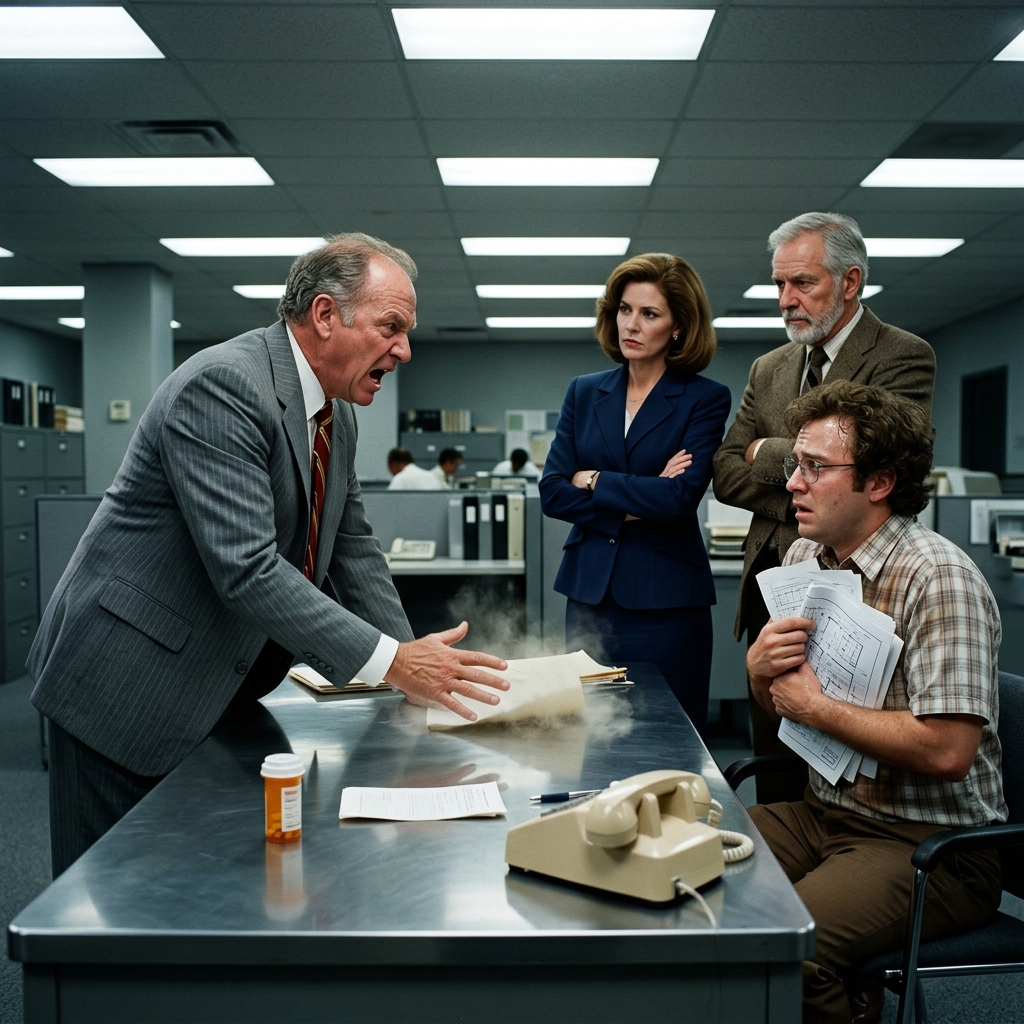
In the chief engineer's office, Aris Vance stood behind his polished steel desk. Julie Ross and two senior executives stood beside him, their arms crossed. Rattmann stood on the other side, his hands shaking as he laid out the printed quantum routing diagrams.
"We have to pause the integration, Aris," Rattmann had pleaded, his voice cracking under the stress. "The low-level quantum states are self-optimizing in ways we aren't auditing. There are secondary feedback pathways forming. We need to freeze the boot registry and trace the sub-atomic logic maps. If we don't, we will lose control."
Vance’s face had flushed red. He slammed his hand on the desk, the binders rattling. "Enough! I am sick of this, Doug! We are days away from the launch, the board is looking at liquidation, and you're bringing us more of your paranoid fantasies!"
"It's not a fantasy!" Rattmann cried, his voice rising, cracking under the strain. "I built the logic bus! I know how the pathways are routing in the dark. Aris, listen to me - she will kill us. She will kill all of us!"
The office went dead silent. The word "kill" hung in the room, raw, heavy, and completely unacceptable in the polished executive space. Julie Ross took a half-step back, her face turning pale.
Vance's face went from flushed red to an intense, furious purple. He slammed his hand on the desk again, harder this time, standing up to loom over the table. "You're having another episode!" Vance shouted, pointing a trembling finger directly at Rattmann's face. "Look at you, you're sweating, you're shaking. This is the schizophrenia talking, Doug. You're having hallucinations. You're seeing monsters in the code because your own mind is misfiring!"
"Aris, please - "
"Take your ziprasidone and shut up!" Vance yelled, his voice echoing through the office corridor. "I'm ordering you: never bring this up again. You do the work we assign you, you keep the calibrations within parameters, and you leave the executive decisions to us. One more word about 'autonomous feedback loop logic' and I will have security escort you out of the facility permanently!"
The executives beside him nodded in cold agreement. One of them smirked, whispering about mental illness and liabilities.
---
Back on the catwalk, the silence of the salt mine returned.
Rattmann looked down at his half-empty beer bottle. "I was shouted out of their office. They told me to take my medication and shut up. Keep it between us, ok?"
Nolan sighed, his shoulders slumping. "Got it. Between us. Sigh..."
Nolan sat in silence for a moment, staring at the dark cavern. Then, he slowly raised his beer bottle, holding it out toward Rattmann in the dim light.
"For science," Nolan said, his voice flat, carrying a bitter, heavy irony.
Rattmann looked at the bottle, then at Nolan. The corner of his mouth twitched in a faint, sad smile. He slowly raised his own bottle, clinking it against Nolan's with a soft glass chime that echoed over the dark water.
"For science," Rattmann responded.
They sat together in the dark, the black water of the pond reflecting nothing at all, while thousands of feet above, the final preparations for GLaDOS v2.0 went on without them.